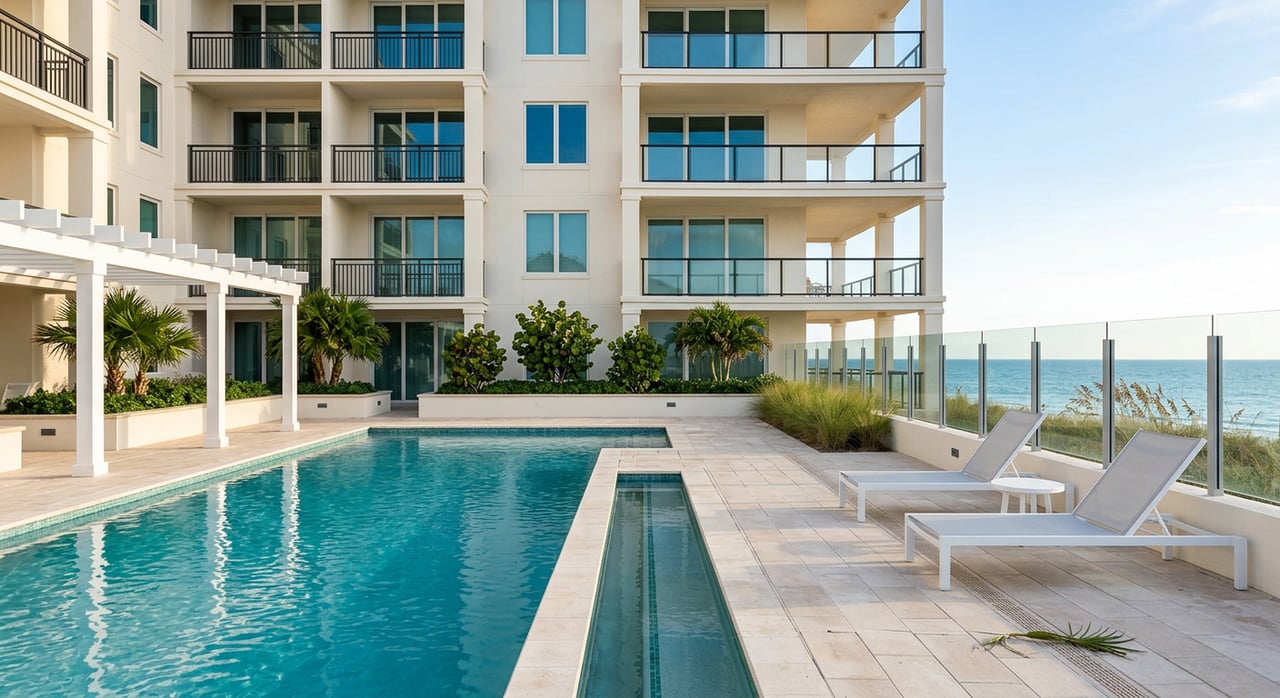
You know the feeling you get when the sun breaks over the Atlantic and the first sound is waves, not yard work? That is what draws many buyers to oceanfront condos in Jacksonville Beach. But compared to a single-family beach home, the costs, rules, and risks work differently. In this guide, you will get clear price context, how building age and shoreline projects shape value, the real monthly costs, rental rules, and a due-diligence checklist you can use to protect your investment. Let’s dive in.
Price snapshot and what you get
Recent market snapshots for the 32250 zip code place the median sale price in the mid six figures, roughly 600,000 to 675,000 as of early 2026. Inventory in this coastal niche can shift month to month, so check a fresh local snapshot before you write an offer.
Here is a simple way to think about oceanfront condo pricing in Jacksonville Beach today:
- Entry and older 1–2 bedroom oceanfront units. Often mid 400s to low 700s, especially in 1970s buildings and non-penthouse floors.
- Mid-tier renovated 2–3 bedroom units. Commonly 700,000 to 1.5 million for updated residences with stronger views or larger footprints.
- Luxury penthouses and newer high-end projects. Frequently 1.5 million to 4 million+ for larger, fully renovated oceanfront residences in premium buildings.
Small market size means time on market and pricing can vary widely by building, floor height, view corridor, and recent building projects. If you want pinpoint comps, ask for a building-level analysis before you make terms.
Condo vs single-family at the beach
Choosing a condo or a house is really about your lifestyle and tolerance for responsibility.
- Maintenance and time. With a condo, the association maintains the exterior and common elements, which saves you time. A house gives you control but also 100 percent of the upkeep.
- Monthly costs. Condos wrap many costs into HOA dues. Houses do not have HOA dues in many areas, but you will carry your own insurance, reserves, and exterior repairs.
- Insurance complexity. Condo owners buy an HO-6 policy for interiors and contents. The association carries master coverage. A house owner carries full dwelling coverage, flood if required, and wind. We outline both below.
- Space and privacy. Houses usually win on private outdoor space and storage. Condos offer ocean views and amenities at a lower entry price than many oceanfront homes.
- Rules and rentals. Condos have association rules that can limit changes and rentals. Houses can be more flexible, subject to city rules and zoning.
What drives value by building and location
Older high-rises from the 1970s–1980s
Many oceanfront buildings on Jax Beach date to the 1970s and 1980s. They often have concrete or masonry construction, covered parking, and larger floor plans. Expect stronger value per square foot if the structure is well maintained, but flag near-term capital needs such as balconies, railings, envelope, and roof projects that can lead to special assessments.
Newer mid- and high-rise developments
Post-2000 buildings usually come with modern amenities, updated finishes, and tighter code standards. They command higher prices and often higher HOA dues due to amenities and today’s insurance costs.
Low-rise and boutique associations
Smaller associations can feel more private and sometimes show lower baseline dues thanks to simpler amenities. The tradeoff is fewer reserve resources, which can make large repairs or storm-related work more dependent on special assessments.
Central pier area vs north/south segments
Condos near the pier and 1st Street often command a premium for walkability to restaurants and beach amenities, which can be a selling point for both primary and second-home buyers. For a quick feel for what is nearby, see the beach area highlights on the Margaritaville Jacksonville Beach destination guide (accessed Mar 3, 2026): walkable beach and pier area overview.
North and south segments differ by proximity to parks and recent shoreline work. Duval County’s shoreline is part of a federal shore protection program. In 2024, about 1.3 million cubic yards of sand were placed along the Duval coastline to bolster dunes and reduce near-term erosion risk. Nourishment helps protect property values, but it is periodic, not permanent. Learn more from the U.S. Army Corps Duval County project page (accessed Mar 3, 2026): Duval County Shore Protection Project.
The real monthly cost: HOA, reserves, insurance
HOA dues and what they include
Oceanfront HOA dues vary widely. You will see ranges from several hundred dollars per month in simple buildings to well over 1,000 per month in full-amenity or staffed properties. What drives the spread: building age and capital needs, the amenity package, whether water and trash are included, how insurance is handled, and the level of reserve funding. For a quick refresher on typical HOA inclusions, see this plain-English explainer from HOA Start (accessed Mar 3, 2026): what HOA payments usually cover.
Tip: Ask the listing agent or manager for a line-item breakdown of what the dues cover, what they do not cover, and any pending increases.
Reserves, milestone inspections, and SIRS
Florida now requires significant structural oversight for condo buildings three or more stories. Two rules matter most in Jacksonville Beach:
- Milestone inspections. Under Florida Statute 553.899, qualifying buildings must undergo a milestone structural inspection at 30 years of age, with local authorities allowed to require an earlier 25-year inspection in coastal settings. Phase I is a visual review. If defects are found, Phase II requires more detailed assessment and repair plans. See the statute text (accessed Mar 3, 2026): Florida Statute 553.899.
- Structural Integrity Reserve Study (SIRS). Chapter 718 requires associations to budget reserves for key structural components based on a formal study and prohibits waiving reserves for those items once the SIRS applies. Review the Condominium Act for reserve and disclosure rules (accessed Mar 3, 2026): Florida Condominium Act, Chapter 718.
Practical takeaway: Ask for the most recent milestone report, the SIRS, the reserve schedule, and the board’s repair plan. A recent Phase II or underfunded reserves can lead to large special assessments on a tight timeline.
Insurance: association policy vs your HO-6
- Association master policy. Florida’s Condominium Act requires associations to insure common elements and building components. Always request the master policy declarations to confirm coverage type and deductibles, including any separate wind or hurricane policy. Source: Florida Condominium Act, Chapter 718 (accessed Mar 3, 2026).
- Flood insurance. Many oceanfront condos carry an NFIP Residential Condominium Building Association Policy, known as RCBAP. If the building’s replacement value exceeds NFIP limits, the association or owners may need excess flood coverage. Learn how RCBAP works from FEMA (accessed Mar 3, 2026): RCBAP overview.
- Your unit policy. You will typically carry an HO-6 policy for interior build-out, personal property, liability, and loss assessment. Ask your insurance advisor to quote realistic hurricane deductibles and explain how the master policy’s deductibles could be shared after a storm.
Financing and lender approval
Many conventional lenders require the building to be eligible under Fannie Mae or Freddie Mac condo project standards. Key items include owner-occupancy ratios, reserve funding, litigation, commercial space, and structural or safety status. If a building is non-warrantable, financing can still be possible through portfolio lenders, often with higher down payments or rates. For a summary of common eligibility items, see Fannie Mae’s guidance (accessed Mar 3, 2026): condo project requirements overview.
If you plan to use FHA or VA financing, ask your lender early to confirm project approval or single-unit eligibility and what documents they need from the association.
Short-term rentals: what to know before you buy
Jacksonville Beach regulates short-term vacation rentals. If you plan to rent for fewer than 30 days or less than one calendar month at a time, you generally need to register with the City, obtain an initial certificate, pass a Fire Marshal inspection for the initial or any modified certificate, and renew annually. City fees include a 150 dollar application plus a local business tax of about 79.20 dollars per property. Owner-occupied units that rent 50 percent or less are exempt from the short-term rental program. Details are on the City’s page (accessed Mar 3, 2026): Jacksonville Beach Short-Term Vacation Rentals.
At the county and state level, tourist development taxes, sales tax, and state lodging registration can apply. Some platforms do not remit all local taxes on your behalf. You should confirm registration and remittance with Duval County and City offices; start here (accessed Mar 3, 2026): City of Jacksonville tax and licensing resources.
Why it matters: Rules, inspection requirements, and fees reduce net rental yield, and high investor concentrations can affect some lenders’ project eligibility standards. If rentals are part of your plan, verify building-level restrictions and the City steps before you buy.
Buyer due-diligence checklist for oceanfront condos
Before you make an offer, request these items from the seller, association, or management company. Review them with your agent, lender, and insurance advisor.
- Association documents packet. Bylaws, declaration, rules, current budget, most recent reserve study, and SIRS if it applies, plus meeting minutes for the past 12–24 months. See reserve and disclosure requirements in Chapter 718 (accessed Mar 3, 2026).
- Milestone inspection reports. Phase I and any Phase II findings with repair timelines for buildings three or more stories. If an inspection is scheduled but not complete, get the date and scope. Statute reference: Florida Statute 553.899 (accessed Mar 3, 2026).
- Financials and reserves. Recent audited financials, current reserve balance, and the SIRS funding schedule vs actual contributions. Repeated reserve waivers or chronic underfunding are red flags. See Chapter 718 (accessed Mar 3, 2026).
- Insurance certificates. Association master policy declarations for property, wind or hurricane, liability, and flood. Ask for a history of any non-renewals or premium spikes. Learn flood policy basics via FEMA’s RCBAP overview (accessed Mar 3, 2026).
- Litigation disclosure. Any pending or past claims involving the association, developer, or major contractors, which can affect financing.
- Special assessments. A record of assessments in the past five years and any planned assessments with amounts and timelines. Confirm whether the seller has paid or will credit outstanding amounts.
- Flood zone and elevation. Request the building’s and unit’s elevation certificate and confirm lender flood requirements based on current maps.
- Short-term rental status. The unit’s City certificate, business tax receipt, Fire Marshal inspection history, and any building-level rental caps. See City guidance (accessed Mar 3, 2026): Jacksonville Beach STVR program.
- Lender eligibility. Ask your lender to evaluate the project early for Fannie/Freddie or other program approval and to flag any documentation needs. Reference: Fannie Mae condo project requirements (accessed Mar 3, 2026).
How to make a confident offer
- Get building-specific. Pricing can vary by stack, view, and recent capital work. Have your agent pull recent comps within the same building and 1–2 adjacent buildings.
- Underwrite the HOA. Review reserves, milestone reports, insurance deductibles, and any pending assessments. Build realistic monthly and one-time cost scenarios before you set your offer price.
- Align financing early. Share HOA docs with your lender right away. Confirm project eligibility, reserve status, and any structural items that could affect underwriting.
- Plan for storms and sand. Understand the building’s hurricane deductibles, flood coverage, and nourishment history. This helps you compare risk-adjusted value across locations.
If you want a clear, building-by-building picture before you act, we are ready to help you compare options and negotiate the right terms. Start your beach search with the Willie Lane Group.
FAQs
What does an HOA fee usually cover in an oceanfront condo?
- Most associations include master property insurance on common elements, exterior maintenance, water and trash, elevator and pool care, management, and reserves. Flood coverage may or may not be in the master policy. Always check the budget and declarations. For typical inclusions, see this explainer from HOA Start (accessed Mar 3, 2026): what HOA payments usually cover.
Will a lender finance an older Jacksonville Beach condo?
- Often yes, but lenders will require the building to comply with milestone inspections and SIRS rules and may pause certain loan types if repairs are outstanding. Ask your lender to review the milestone report, SIRS, reserves, insurance, and any active violations early. Statutes: Florida Statute 553.899 and Chapter 718 (accessed Mar 3, 2026).
How should I budget for insurance and special assessments on a condo?
- Expect an HO-6 policy for your interiors and contents, plus the association master policy’s share through dues. Many oceanfront buildings carry separate wind or hurricane deductibles and flood coverage via RCBAP. Ask for the association’s declarations and recent premium history, then get an HO-6 quote with realistic hurricane deductibles. Learn flood basics here (accessed Mar 3, 2026): RCBAP overview.
Are short-term rentals allowed in Jacksonville Beach condos?
- The City requires registration and a certificate for short-term vacation rentals, an initial Fire Marshal inspection for new or modified certificates, and annual renewal. Some condos also limit rental length or frequency. See the City’s rules (accessed Mar 3, 2026): Jacksonville Beach Short-Term Vacation Rentals.