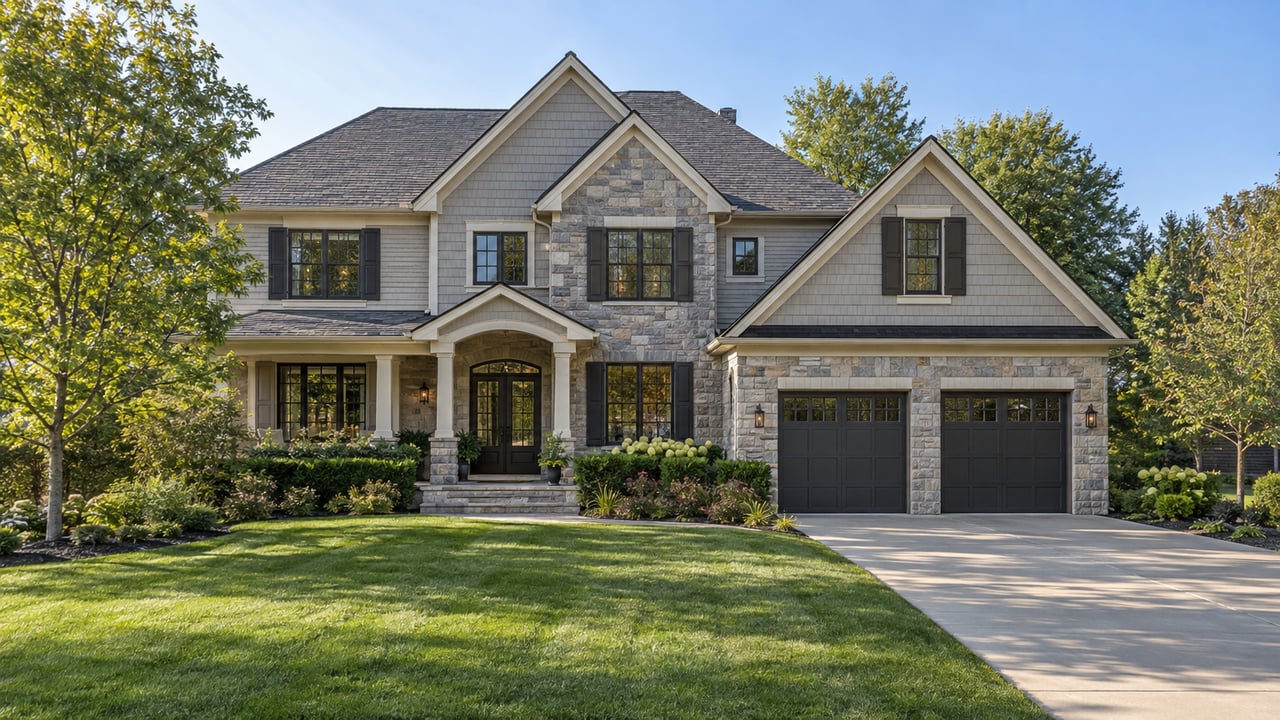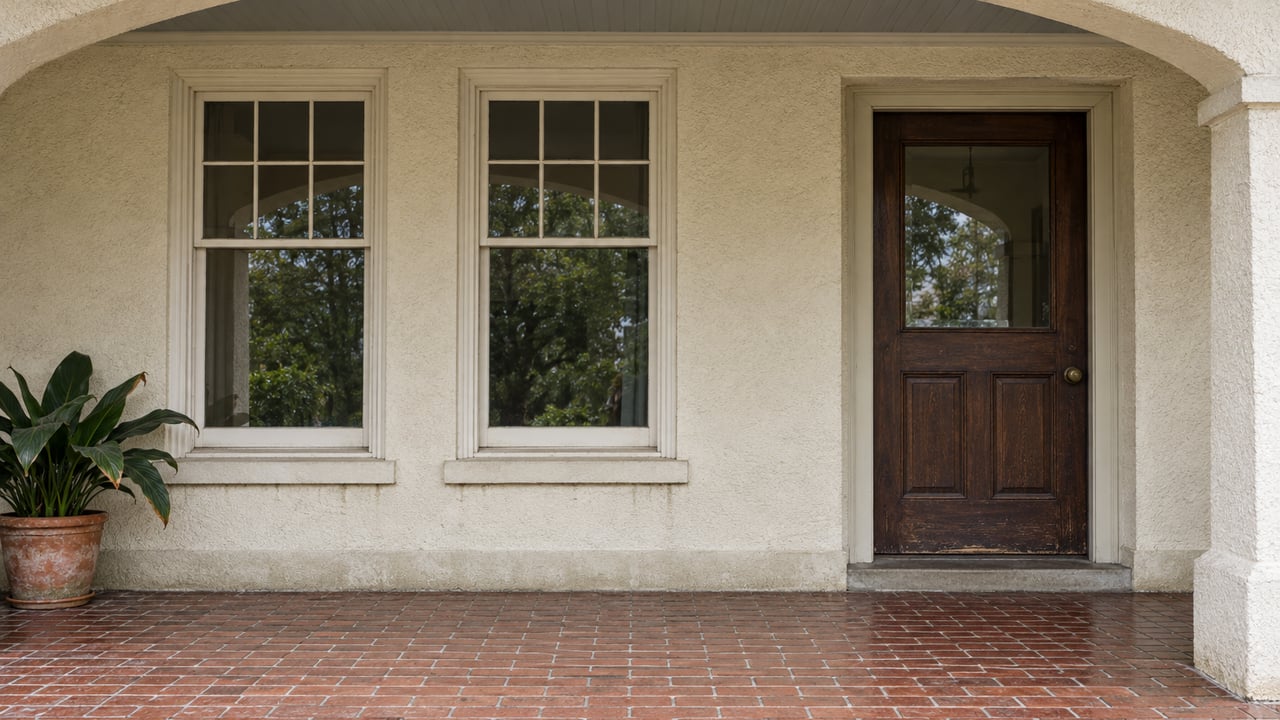
On Aug. 11, 2026, Jacksonville City Council voted 11-5 to let the owner of a 1926 Tudor Revival on St. Johns Avenue replace 20 windows. The city had already approved replacing 53 of the house's 73 windows. The final 20 went through a staff recommendation to deny, a denial from the Jacksonville Historic Preservation Commission, a committee hearing and then a full council vote.
For buyers in the Riverside-Avondale Historic District, that case comes down to one rule. Under the city's review rules, each original window carries more weight as fewer of them remain. Florida's wind-mitigation inspection form works the other way and grades a house by its weakest opening. When you buy one of these homes, you take on both.
How 53 Approvals Turned Into a Council Vote
The public record for the house, filed as COA-26-33533, shows how long the final step took:
- Jan. 16, 2026. City staff visited the house and counted 53 non-historic or previously replaced windows and 20 historic ones.
- April 22, 2026. The Planning Department staff report recommended denial. The proposal called for wood-clad windows matching the existing openings and light patterns, using the same product approved under two earlier certificates, COA-25-33271 and COA-25-32973. Staff said it did not have enough evidence that the 20 windows were beyond repair.
- May 12, 2026. The commission issued its final order denying the application. May 29, the owner filed an appeal.
- Aug. 4, 2026. The Land Use and Zoning Committee voted 7-0 to grant the appeal. Its minutes describe "lengthy discussion regarding evaluation of the windows and the differences in approach between the City and private inspections."
- Aug. 11, 2026. City Council approved the appeal 11-5.
That is nearly seven months from the site visit to the vote, all about windows the owner wanted to replace with a product the city had already accepted on the same house.
Why "Irreparable" Decides Everything
The owner pointed the commission to page 65 of the Riverside-Avondale Design Guidelines: "If 50% or more [windows] are deteriorated or missing, then wholesale replacement of windows is allowable." By the numbers, a house where 53 of 73 windows were already replaced is well past half. Staff read the situation differently. Because these were the last 20 historic wood windows on the house and contributed to its historic fabric, staff found they "should be retained and repaired rather than replaced."
That reading follows how the city's 2026 COA Matrix routes window work on contributing houses. If a historic window is judged irreparable and replaced with wood, wood blend, aluminum clad or like-for-like material in a matching design, staff can approve it administratively. Replacing windows that can still be repaired goes to the full commission, as does any vinyl replacement. So the material is rarely the deciding question. The deciding question is whether the window can be repaired, and the St. Johns Avenue case shows that a city inspection and a private inspection can reach different answers. The staff report notes that the applicant's newest documents appeared to show trim and sills removed to expose rot and wood-destroying organisms.
Whether a house is "contributing" goes back to a 1985 survey that listed each building as contributing or non-contributing. The city's COA Process page links the current Riverside Avondale list and notes that any unlisted structure is reviewed on its own date of construction and architectural significance. The city's Historic Preservation FAQ shows how to use the Land Development Map to check whether a property falls inside a district. Window replacement on non-contributing structures is reviewed mainly for compatible design.
The Same Logic Applies Past the Windows
The matrix sorts most exterior projects the same way. Every condition in the staff column has to be met for administrative review, and meeting any condition in the commission column sends the project to the commission.
| Project on a contributing house | Staff review when it is | Commission review when it is |
|---|---|---|
| Historic window replacement | Irreparable, matching design and approved material | Repairable, vinyl, or an incompatible design |
| Additions | One story, compatible, under 25% of footprint, not readily visible | Two stories, street-visible, incompatible, or over 25% |
| Fences | Consistent with the city's Fencing and Wall Guidelines | Inconsistent, street-visible alternative, or highly decorative |
| Roof and solar | Evaluated on matching design, panel placement, visibility and height | Evaluated on the same factors |
| Demolition of the main house | Not eligible | Always |
The route changes your schedule. The city says administrative certificates generally take one to two weeks. Commission review takes at least a month, and applications should go in about six weeks before the meeting, around the 15th of the month before. Commission fees are $315 for alterations, $495 for additions, new construction or relocation, and $610 for demolition. Approval can still change the plan. At the former Deluxe Laundry buildings at 2216 Oak Street, Resident Community News reported that commissioners dropped an all-brick-paver parking requirement after the applicant raised concerns about delivery trucks. They allowed asphalt except for bricked parking spaces and left the building's blue sign to a separate certificate.
How the Insurer Reads the Same Windows
The house that needs a certificate for its windows also needs an insurance policy. Citizens requires a four-point inspection on property-owner and dwelling applications for homes over 20 years old. Its inspection form has a line for active knob-and-tube and cloth wiring, records cast iron among the plumbing pipe types, and asks whether the plumbing is original or re-piped. The Florida Department of Financial Services says the applicant pays for the inspection and that declining a requested inspection may lead to a refusal of coverage. It also notes that older homes may be offered modified HO-8 or dwelling-form policies.
Roof cutoffs depend on who sets them. Citizens asks for documentation of five years of remaining useful life on soft roofs over 25 years old and hard roofs over 50. The state's four-point inspection guide says a carrier may ask for five remaining years on shingles older than 15 years or on tile and metal older than 20, and that each carrier's criteria differ.
Windows matter most on the wind-mitigation side. The Office of Insurance Regulation's revised form OIR-B1-1802 took effect April 1, 2026. It rates opening protection by the weakest glazed opening on the house, and openings that are damaged and need replacement do not qualify for mitigation rate differentials. The grades include:
- A: verified large-missile protection rated for a 9-pound impact on windows and doors
- B: verified protection rated for 4 to 8 pounds on windows and doors
- C: verified plywood or OSB coverings
- N, X and Z: unverified protection, no protection, and damaged openings needing repair or replacement
Insurers must offer mitigation discounts, but OIR publishes ranges and insurer-specific savings, not a single guaranteed percentage. On a house with 53 replaced windows and 20 originals, the 20 originals are the ones that can set the grade for the whole house.
The city does offer a way to protect windows without replacing them. Its window supplement asks owners to try repair before replacement. It says interior or exterior storm windows can protect historic windows and save on heating and cooling costs. Approved replacements must match the original design and sit recessed 2 to 4 inches, and preservation staff cannot approve permanent nailing-fin products. The state's My Safe Florida Home program lists window upgrades as eligible work. The state contributes $2 for every homeowner dollar, up to $10,000, for homestead homes insured at $700,000 or less with a building permit dated before 2008. Grants require an initial inspection through the program first. Under the city's COA Process rules, window work in the historic district still requires a certificate no matter how it is paid for.
What to Check Before You Make an Offer
Count the windows before you get attached to the floor plan. A contributing house with most of its originals has a different future than one with a few left, and the St. Johns Avenue staff report shows that prior approvals are tracked by certificate number. The city's COA application search finds past certificates by address or COA number, so you can compare the work you see against the work that was approved. The city's Historic Preservation FAQ warns that work started without approval can lead to a violation, corrective action or a requirement to undo the work. Once a notice of violation is issued, the base fee doubles.
The city keeps records on the other side of the issue too. A March 2025 demolition-by-neglect task force report counted 52 locally designated structures approved for demolition since 2021. It also found $196,440,890 in fines issued to properties in local historic districts since 1998, of which $431,719 had been paid. The task force recommended an inventory of historic properties with fines or liens. That was a recommendation, not an enacted rule.
The market gives buyers room to look into all of this. In September 2026, Duval County single-family homes sold in a median 29 days with a 3.8-month supply, according to Northeast Florida Association of Realtors data. At that pace, there is usually time during the inspection period to order a four-point inspection, get a wind-mitigation report and talk with Historic Preservation Section staff.
Frequently Asked Questions
Does Riverside Avondale Preservation approve exterior changes? No. RAP describes itself as a nonprofit resource and liaison. City Planning Department staff and the commission make the decisions. RAP does offer a video series on the certificate process and homeowner workshops on windows and water intrusion.
How long does an approved certificate stay valid? The city's COA Process page says work must start within one year of approval, and the certificate lasts five years once work begins.
When does the commission meet? Generally on the fourth Wednesday of each month at 214 North Hogan Street, according to the commission's page. The city scheduled its October meeting for Oct. 28, 2026. If that schedule holds, the next one is Nov. 25.
This post is general information, not legal, insurance or financial advice. Confirm your own property's requirements with the city's Historic Preservation Section, your insurer and the appropriate professionals.
If you are weighing a Riverside or Avondale house and want help reading its window history, certificate record and inspection reports before you commit, Willie Lane Group can help you sort through that paperwork. Schedule Your Consultation.